The Revival of the 'Gesamtkunstwerk': The Total Work of Art in the Digital Age
The concept of Gesamtkunstwerk, initially popularized by Wagner and institutionalized by the Bauhaus, aimed to unify diverse artistic disciplines into holistic, integrated experiences, viewing "building" as the ultimate creative culmination. In the digital age, technologies like VR, AR, and AI are experiencing a renaissance of these principles. They facilitate unprecedented interdisciplinary collaboration, breaking traditional boundaries to create immersive, multidisciplinary art forms that realize and expand the original Bauhaus vision for comprehensive, participatory artistic creation.
The concept of Gesamtkunstwerk, meaning "total work of art," is experiencing a remarkable renaissance in the digital age, particularly through the lens of Bauhaus principles and contemporary technological capabilities. Originally popularized by composer Richard Wagner in 1849 and later embraced by the revolutionary Bauhaus school, this integrative approach to artistic creation sought to unify multiple disciplines into cohesive, holistic experiences. The Bauhaus, founded by Walter Gropius in 1919, embodied this philosophy through its fundamental principle that "Das Endziel aller bildnerischen Tätigkeit ist der Bau" (the ultimate goal of all artistic activity is building), representing a synthesis of art, craft, and design. Today, as digital and augmented reality technologies mature, we witness an unprecedented opportunity to revive and expand upon these foundational concepts, creating immersive, multidisciplinary experiences that transcend traditional artistic boundaries and establish new paradigms for creative expression in the twenty-first century.
Historical Foundations and Philosophical Underpinnings
The Origins of Gesamtkunstwerk
The concept of Gesamtkunstwerk emerged from a profound dissatisfaction with the fragmentation of artistic disciplines in the 19th century. Originally coined by German philosopher Karl Friedrich Ernst Trahndorff in 1827 in his essay "Aesthetic or Theory of Worldview and Art," the term gained widespread recognition through Richard Wagner's theoretical writings and operatic works. Wagner, having "lost faith in the arts," argued for a reconciliation of all creative processes which he considered "pointlessly inharmonious and dissonant," advocating for a reunion of art, opera, and drama within a cohesive environment. His vision encompassed an integration of music, poetry, drama, visual arts, and architecture, creating what he termed "the consummate artwork of the future".
Wagner's conception was revolutionary in its scope, proposing that no artistic faculty should remain unused in the total work of art. This philosophy rejected the hierarchical separation of art forms that had dominated Western culture, instead promoting a democratic integration where each discipline contributed equally to a unified aesthetic experience. The composer's theoretical framework extended beyond mere combination, emphasizing the creation of multisensory experiences that would engage audiences on multiple levels simultaneously. This approach laid the groundwork for future movements that would seek to break down artificial barriers between artistic disciplines and create more immersive, holistic forms of expression.
The Bauhaus School and Artistic Integration
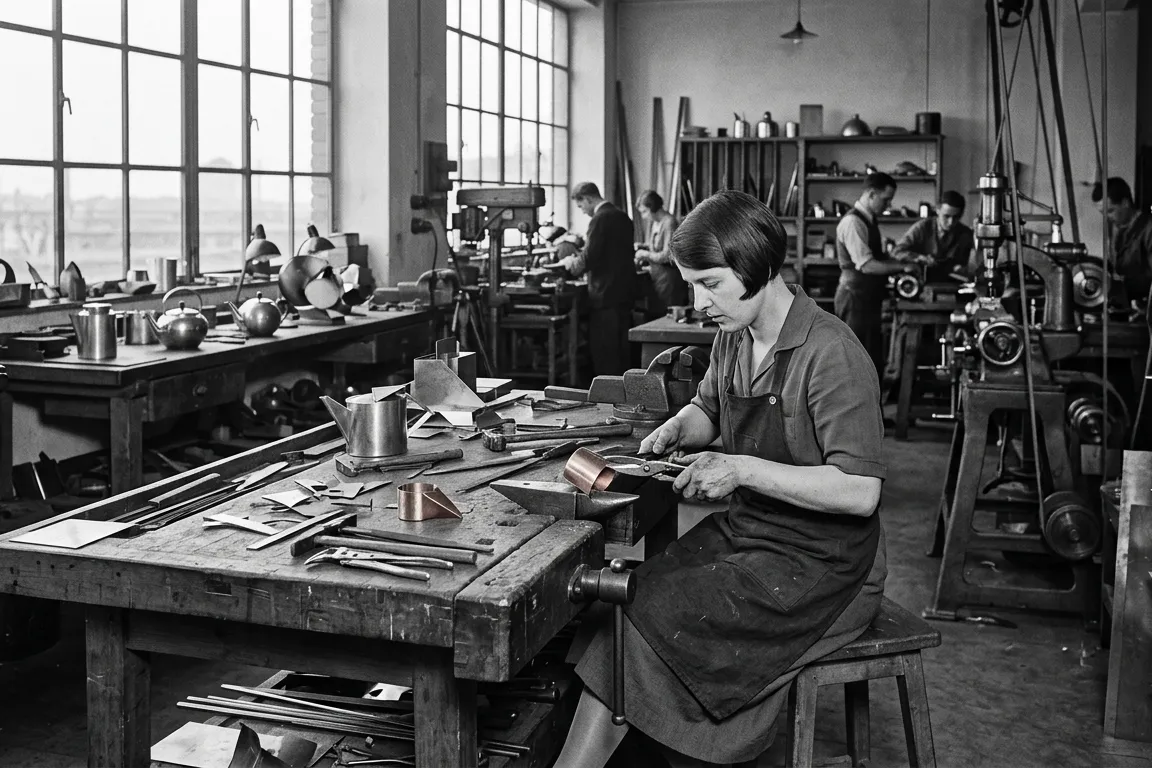
The Staatliche Bauhaus, established in 1919 by Walter Gropius in Weimar, represented perhaps the most successful institutional embodiment of Gesamtkunstwerk principles in the twentieth century. The school emerged from the merger of two existing institutions: the Großherzoglich-Sächsische Kunstschule Weimar and Henry van de Velde's Großherzoglich-Sächsische Kunstgewerbeschule Weimar, creating a unique educational environment that would fundamentally reshape modern design thinking. Gropius conceived the Bauhaus as a working community where the traditional distinction between artist and craftsperson would be eliminated, reflecting the Gesamtkunstwerk ideal of integrated creative practice.
The Bauhaus manifesto declared architecture as the ultimate goal of all visual arts, positioning building as the culmination of artistic activity that would unite painting, sculpture, and decorative arts within a single comprehensive framework. This architectural focus was not merely structural but philosophical, representing a belief that the built environment could serve as a canvas for total artistic expression. The school's approach to education reinforced this integration, with students learning across multiple disciplines and working collaboratively on projects that spanned traditional artistic boundaries. The revolutionary aspect of the Bauhaus extended to its social mission, as its members sought to eliminate societal differences through their creative work and contribute to international understanding through unified artistic language.
The institution's commitment to gender equality further reflected its progressive interpretation of Gesamtkunstwerk principles. Gropius proclaimed that any person of good character would be admitted regardless of age or gender, provided their talent and preparation were deemed adequate by the master council. This inclusive approach created one of the first institutions to offer women free access to public art education, embodying the democratic ideals inherent in the total work of art concept. The Bauhaus thus represented not only an artistic revolution but also a social one, demonstrating how Gesamtkunstwerk principles could extend beyond aesthetic concerns to encompass broader cultural transformation.
Contemporary Digital Manifestations
Virtual Reality and Immersive Environments
The digital age has created unprecedented opportunities for realizing Gesamtkunstwerk principles through virtual reality and augmented reality technologies. Contemporary artists are leveraging these platforms to create immersive experiences that engage multiple senses simultaneously, fulfilling Wagner's original vision of comprehensive artistic integration in ways previously impossible. Virtual reality installations allow creators to design complete environmental experiences where architecture, music, visual art, narrative, and interactive elements combine seamlessly to transport audiences into entirely constructed realities. These digital environments transcend the physical limitations that constrained historical attempts at total works of art, enabling artists to manipulate space, time, and sensory perception with unprecedented freedom.
Modern VR implementations of Gesamtkunstwerk concepts often incorporate real-time audience interaction, allowing participants to become active collaborators in the artistic experience rather than passive observers. This participatory element represents an evolution beyond Wagner's original conception, creating dynamic works that change and develop based on user engagement. Artists working in these mediums can integrate spatial audio, haptic feedback, visual effects, and narrative elements to create truly synesthetic experiences that engage multiple sensory modalities simultaneously. The ability to create infinite virtual spaces also allows for architectural expressions that would be physically impossible, enabling designers to realize fantastical visions that push beyond material constraints.
The democratizing aspect of digital platforms also reflects Bauhaus ideals, as VR and AR technologies become increasingly accessible to creators from diverse backgrounds and disciplines. Independent artists can now create sophisticated multimedia experiences without requiring the extensive resources that traditional Gesamtkunstwerk projects demanded. Online platforms and collaborative tools enable interdisciplinary teams to work together across geographical boundaries, fostering the kind of collective creative practice that the Bauhaus championed while extending it to a global scale.
Interactive Digital Exhibitions and Multimedia Art
Contemporary museums and galleries are increasingly embracing digital technologies to create exhibition experiences that embody Gesamtkunstwerk principles through interactive and multimedia presentations. These installations often combine traditional artworks with digital enhancements, creating layered experiences where visitors can engage with multiple forms of content simultaneously. Interactive digital exhibitions utilize touchscreen interfaces, motion sensors, and augmented reality overlays to provide contextual information, alternative perspectives, and supplementary content that enriches the primary artistic experience. This approach transforms static displays into dynamic environments where visitors actively participate in meaning-making processes.
The integration of digital storytelling techniques within exhibition spaces creates narrative frameworks that connect disparate artworks and artifacts into cohesive thematic experiences. Curators can employ multimedia presentations that incorporate film, animation, interactive graphics, and spatial audio to create immersive environments that guide visitors through complex historical or conceptual territories. These digital enhancements often reveal hidden connections between works, provide access to archival materials, and offer multiple interpretive pathways that accommodate diverse learning styles and interests. The result is a form of institutional Gesamtkunstwerk that unifies curatorial vision, artistic content, architectural space, and technological innovation.
Recent developments in augmented reality applications for cultural institutions demonstrate how digital overlays can transform physical spaces into hybrid environments that blend material and virtual elements. Visitors using AR-enabled devices can access additional layers of information, see reconstructions of damaged or missing elements, and experience artworks in their original contexts through digital simulation. This technology enables museums to present comprehensive cultural experiences that would be impossible through traditional display methods alone, creating new forms of educational engagement that appeal to contemporary audiences while preserving the essential character of historical materials.
Interdisciplinary Collaboration in Digital Environments
Breaking Down Traditional Artistic Boundaries
The digital age has facilitated unprecedented levels of interdisciplinary collaboration, enabling artists, technologists, designers, musicians, and writers to work together in ways that realize the collaborative ideals central to both Gesamtkunstwerk and Bauhaus philosophies. Contemporary creative practices increasingly reject traditional disciplinary boundaries, with artists routinely incorporating elements from multiple fields to create hybrid works that resist easy categorization. Digital platforms and collaborative software tools have eliminated many of the logistical barriers that historically prevented large-scale interdisciplinary projects, allowing creators to work together synchronously and asynchronously across vast distances while maintaining creative coherence.
The emergence of creative coding and digital art platforms has democratized access to sophisticated artistic tools, enabling practitioners from diverse backgrounds to contribute to multimedia projects regardless of their technical expertise. Visual artists can collaborate with programmers to create interactive installations, musicians can work with data scientists to develop algorithmic compositions, and architects can partner with game designers to build virtual environments. This cross-pollination of skills and perspectives reflects the Bauhaus vision of eliminating artificial distinctions between different types of creative work, while extending those principles into digital realms that were unimaginable during the school's existence.
Contemporary art collectives and interdisciplinary studios often organize themselves around project-based collaborations that bring together specialists from multiple fields to address specific creative challenges. These temporary alliances mirror the workshop-based structure of the Bauhaus while leveraging digital communication tools to coordinate complex projects involving participants from around the world. The resulting works often exhibit characteristics that could not have been achieved through single-discipline approaches, demonstrating how digital technologies can amplify the transformative potential of collaborative creative practice.
Educational Institutions and Digital Arts Integration
Modern educational institutions are increasingly recognizing the value of interdisciplinary approaches that reflect Gesamtkunstwerk principles within their curriculum design and pedagogical methods. Art schools, universities, and specialized programs are developing hybrid courses that combine traditional artistic training with digital literacy, programming skills, and collaborative project management. These educational initiatives often structure learning experiences around team-based projects that require students from different specializations to work together, mirroring the collaborative workshop environment that characterized the historical Bauhaus while adapting it to contemporary technological capabilities.
The integration of digital arts within traditional fine arts programs has created new opportunities for students to explore multimedia expression and cross-disciplinary collaboration from early stages of their artistic development. Students studying painting might collaborate with music composition students to create audiovisual installations, while architecture students work with computer science majors to develop interactive building systems. These educational partnerships often produce innovative works that demonstrate the creative potential of combining traditional artistic skills with digital technologies, while preparing students for careers in an increasingly interconnected creative economy.
Professional development programs and continuing education initiatives are also embracing interdisciplinary approaches that reflect contemporary creative industry demands. Working artists can access workshops and residency programs that introduce them to new technologies and collaborative methods, enabling them to expand their practice beyond traditional boundaries. These programs often emphasize the importance of maintaining artistic vision while adapting to technological change, reflecting the Bauhaus principle that technical innovation should serve expressive goals rather than dominate them.
Technological Innovation and Artistic Expression
Augmented Reality as Architectural Canvas
Augmented reality technology offers unique opportunities to realize architectural aspects of Gesamtkunstwerk in ways that extend beyond physical building constraints. AR applications can transform any environment into a canvas for comprehensive artistic expression, allowing creators to overlay digital content onto physical spaces in real-time. This capability enables artists to design site-specific installations that respond to existing architectural features while adding layers of meaning through digital intervention. The result is a hybrid form of environmental design that combines material and virtual elements to create immersive experiences that adapt to different locations and contexts.
The architectural potential of augmented reality extends beyond decorative overlay to encompass functional and interactive elements that can transform how people navigate and interact with built environments. AR interfaces can provide wayfinding assistance, historical information, artistic interpretation, and social interaction opportunities within a single integrated system. This comprehensive approach to environmental design reflects the Bauhaus vision of architecture as a total work of art that encompasses all aspects of human experience within designed spaces. Contemporary AR projects often demonstrate how digital augmentation can enhance rather than replace physical architecture, creating symbiotic relationships between material and virtual elements.
Urban planning initiatives increasingly incorporate AR visualization tools to help communities envision proposed developments and participate in design processes through immersive preview experiences. These applications allow residents to experience potential changes to their neighborhoods before construction begins, providing opportunities for collaborative input that reflects the democratic ideals inherent in Gesamtkunstwerk philosophy. The ability to rapidly prototype and iterate architectural designs through AR simulation also enables more experimental approaches to environmental design, encouraging innovation while reducing the risks associated with large-scale construction projects.
Artificial Intelligence and Generative Creativity
The integration of artificial intelligence systems within creative practice represents a contemporary evolution of Gesamtkunstwerk principles that challenges traditional notions of authorship while expanding possibilities for collaborative artistic creation. AI tools can generate visual art, compose music, write text, and even develop architectural designs based on input parameters and training data, enabling human artists to collaborate with algorithmic systems in unprecedented ways. These partnerships often produce works that exhibit characteristics neither human nor machine could achieve independently, demonstrating new forms of creative collaboration that extend beyond human-to-human interaction.
Generative AI systems can be programmed to create works that incorporate elements from multiple artistic disciplines simultaneously, producing multimedia outputs that integrate visual, auditory, textual, and interactive components within unified aesthetic frameworks. Artists working with these systems often develop hybrid practices that combine traditional skills with AI collaboration, using machine learning tools to explore creative territories that would be impossible to navigate through conventional methods alone. The resulting works often challenge audiences to reconsider assumptions about creativity, authorship, and artistic value while demonstrating the potential for technology to amplify rather than replace human creative capacity.
The democratizing potential of AI-assisted creativity reflects Bauhaus ideals of accessible artistic education and production, as these tools enable individuals without extensive technical training to create sophisticated multimedia works. Open-source AI platforms and user-friendly interfaces are making advanced generative capabilities available to diverse communities of creators, potentially realizing the Bauhaus vision of eliminating artificial barriers between professional and amateur artistic practice. However, the ethical implications of AI-generated content also raise important questions about intellectual property, cultural appropriation, and the value of human creativity that contemporary artists must navigate as they explore these new collaborative possibilities.
Future Directions and Emerging Possibilities
Immersive Environments and Spatial Computing
The development of spatial computing technologies promises to create new opportunities for realizing Gesamtkunstwerk principles through environments that seamlessly blend physical and digital elements. Advanced mixed reality systems will enable creators to design experiences where virtual objects and interactions coexist naturally with material spaces, eliminating the current distinction between "real" and "augmented" environments. These technologies will allow artists to create persistent digital installations that exist within specific locations while remaining accessible to anyone equipped with appropriate viewing devices, potentially transforming public spaces into canvases for continuous artistic expression.
The evolution toward ubiquitous computing environments will enable more sophisticated forms of responsive and adaptive artistic installations that can react to environmental conditions, audience behavior, and external data streams in real-time. These systems could create works that evolve continuously based on weather patterns, social media activity, economic indicators, or other dynamic inputs, resulting in living artworks that reflect the changing conditions of contemporary life. Such responsive installations would fulfill the Bauhaus vision of art that engages with social and technological realities while extending that engagement into previously impossible dimensions of temporal and contextual adaptability.
Future spatial computing platforms may also enable new forms of collaborative creation where multiple users can simultaneously contribute to shared virtual environments from different physical locations. These collaborative spaces could host interdisciplinary design sessions where architects, artists, musicians, writers, and programmers work together in real-time to develop comprehensive creative projects. The ability to manipulate shared virtual objects and environments through natural gesture and voice interfaces will make such collaboration more intuitive and accessible, potentially realizing the Bauhaus vision of collective creative practice on a global scale.
Biotechnology and Sensory Integration
Emerging biotechnology applications may enable future Gesamtkunstwerk projects to incorporate biological and physiological elements that create unprecedented forms of sensory integration and audience engagement. Brain-computer interfaces could allow artists to create works that respond directly to viewers' neurological activity, while biometric monitoring could enable installations that adapt to audience emotional states in real-time. These technologies would enable artists to create truly synesthetic experiences that bypass traditional sensory channels to create direct neurological stimulation, potentially realizing Wagner's vision of total artistic immersion through means he could never have imagined.
The integration of biotechnology within artistic practice also raises fascinating possibilities for works that incorporate living organisms as active creative participants. Artists are already experimenting with bio-art that uses bacteria, plants, and other organisms as both medium and collaborator, creating works that evolve through biological processes rather than human intervention alone. Future developments in synthetic biology and bioengineering may enable artists to create entirely new forms of life that function as living artworks, embodying Gesamtkunstwerk principles through the integration of biological, technological, and aesthetic systems.
Advances in pharmaceutical and neuroscience research may also create opportunities for artists to design experiences that temporarily modify audience perception and cognition in controlled ways. While such applications raise obvious ethical concerns, they also suggest possibilities for creating forms of artistic experience that transcend current limitations of human sensory and cognitive capacity. The responsible development of such technologies could enable new forms of artistic expression that fulfill the transformative aspirations of both Gesamtkunstwerk and Bauhaus philosophies while opening entirely new territories for creative exploration.
Conclusion
The revival of Gesamtkunstwerk principles in the digital age represents both a return to foundational artistic ideals and a radical expansion of creative possibilities that would have been unimaginable to the concept's original proponents. The integration of digital and augmented reality technologies with contemporary interdisciplinary collaboration methods has created unprecedented opportunities to realize the vision of total works of art that engage multiple senses, transcend traditional medium boundaries, and create immersive experiences that transform audience engagement with creative content. The Bauhaus school's emphasis on collaborative practice, social engagement, and the elimination of artificial distinctions between artistic disciplines provides a valuable framework for understanding how these technological capabilities can be directed toward meaningful creative and cultural goals.
Contemporary applications of Gesamtkunstwerk principles demonstrate the continued relevance of integrative approaches to artistic creation while highlighting how digital technologies can amplify the democratizing and collaborative potential that attracted early twentieth-century artists to these concepts. Virtual reality environments, interactive digital exhibitions, augmented reality installations, and AI-assisted creative processes all provide platforms for realizing comprehensive artistic visions that engage audiences as active participants rather than passive consumers. These developments suggest that the digital age may finally provide the technological infrastructure necessary to fully realize the ambitious social and aesthetic goals that motivated both Wagner's operatic innovations and the Bauhaus educational experiment.
The future evolution of Gesamtkunstwerk in digital environments will likely depend on the creative community's ability to balance technological innovation with humanistic values, ensuring that advanced tools serve expressive goals rather than dominating them. The most successful contemporary projects demonstrate how digital technologies can enhance rather than replace traditional artistic skills and collaborative practices, creating hybrid approaches that honor historical precedents while exploring new creative territories. As spatial computing, artificial intelligence, and biotechnology continue to mature, artists and educators will need to develop new frameworks for ethical practice and collaborative engagement that preserve the democratic and transformative aspirations of the Gesamtkunstwerk tradition while adapting to contemporary technological and social realities. The ongoing revival of these principles suggests that the quest for total works of art remains as compelling today as it was for the visionary artists and educators who first articulated these revolutionary concepts more than a century ago.