
Marianne Brandt: Metal Workshop Triumph
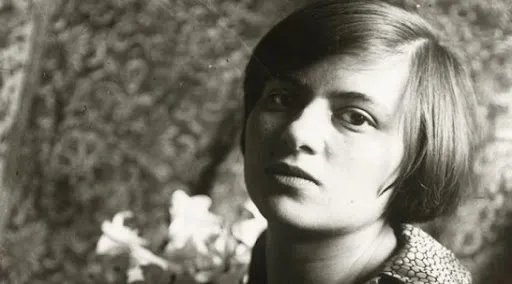
Marianne Brandt’s admission to the metal workshop came through her persistence, talent, and support from László Moholy-Nagy 💡
In the early 1920s, the Bauhaus was an unexpected orthodox institution about gender. Regardless of the progressive manifesto, female students were directed away from heavy materials and towards the weaving workshop. This is a boundary that Marianne Brandt did not accept. A passionate student of industrial design, she was so talented and persistent that she attracted László Moholy-Nagy, the new head of the metal workshop. Moholy-Nagy recognised her brilliant sense of form and broke with tradition to admit her in 1924. Her early days were not easy. Her male colleagues made her do the hardest, menial work like banging out brittle metal sheets by hand so she would leave. Rather than breaking under pressure, Brandt rose to the occasion and became more successful than ever. She would go on to design some of the most iconic, geometrically pure pieces in Bauhaus history, including her famous 1924 tea infuser. In 1928, she successfully succeeded Moholy- Nagy to become the deputy head of the workshop proving one’s competency is beyond gender.
Base Material
- Bauhaus-Archiv / Museum für Gestaltung. "Bauhaus 1919–1933".
- MoMA | The Museum of Modern Art. "The Bauhaus".
- Encyclopædia Britannica. "Bauhaus".