
Lotte Beese: Bauhaus Pioneer
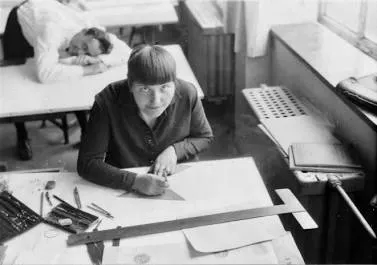
Lotte Beese was one of the few female architects associated with the Bauhaus 🏗️
For some years, the architecture department of the Bauhaus was all male. Although women were very proficient in textiles and ceramics the structural world of bricks and mortar remains frustratingly elusive.
In 1927, Lotte Beese became the first woman to be formally accepted into the building department of the school when the building department was created. Beese was a visionary whose thoughts went far beyond a single building.
Architecture was a means for social improvement in her view. After experiencing the political difficulties of Europe in the 1930s, her great victory came after World War II in the Netherlands, when she was appointed chief urban planner for the bombed city of Rotterdam. Her Masterpiece: Beese designed the famous Pendrecht district of Rotterdam, where she first introduced the concept of the wooneenheid (living unit) a pioneering social housing model where micro-communities of high-rises and low-rises were clustered around shared courtyards, shops and greenery.
By applying the functionalist, human-centric principles she had honed at the Bauhaus to large-scale city planning, Lotte Beese proved that modern design was not only about beautiful chairs or sleek typography; it was about building a better, more equal way of life.
Base Material
- Architectural Association School of Architecture. "AA XX 100: AA Women in Architecture 1917-2017."
- Bauhaus-Archiv Berlin. "Lotte Beese (1903–1988)."
- Doornbos, W. A. M. "Lotte Beese: architect en stedenbouwkundige." nai010 publishers, 2013.
- Weimar, K. "The Bauhaus and Weaving: Gender and Modernity in the Textile Workshop." Journal of Design History, 2000.