
Weimar Bauhaus: State Governance
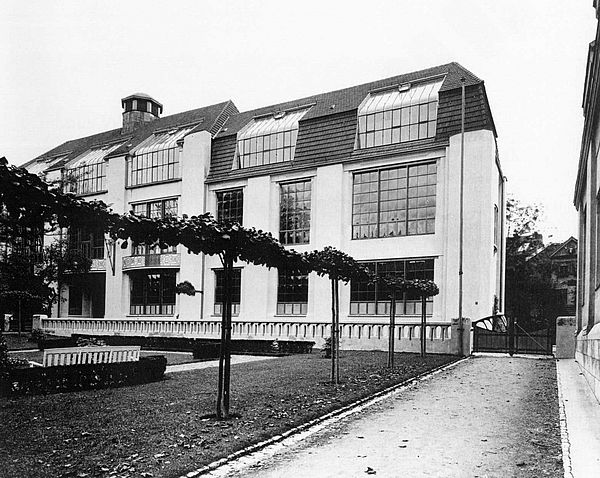
The Bauhaus in Weimar was a state school and depended on the government of Thuringia 🏛️🗳️
The period 1913-1933 marks the foundation and functioning of the Bauhaus. The Weimar College was created in 1919 and Gropius and others were crucially from 1913 onwards engaged quite on a conceptual level in developing and shaping its idea and vision. These long discoveries and experimentations becoming before even its formation quite important will in the functioning period of the college much influence its whole activities.
The pedagogy of the Bauhaus was not a fixed set of theories, but rather a practice that constantly evolved. There was a conscious debate on the functions and tasks of the school between the masters, the director and the students at Weimar, Dessau and Berlin. Consequently, there was never any school of design, art, or architecture that was specific. Nonetheless, there is a principle or approach in pedagogy that is precisely characterized by the continuous change or movement of pedagogical functions, teachers and students. This is exactly what the Bauhaus is trying to teach through its pedagogy.
It was a state-run institution that relied upon the Thuringian government for its authority and funding. As a public school, its development was closely entwined with regional political shifts, which ultimately necessitated its relocation and influenced its unique pedagogical approach.
Base Material
- 'Bauhaus 1913-1933' pt.1