
Weimar Bauhaus: State Governance
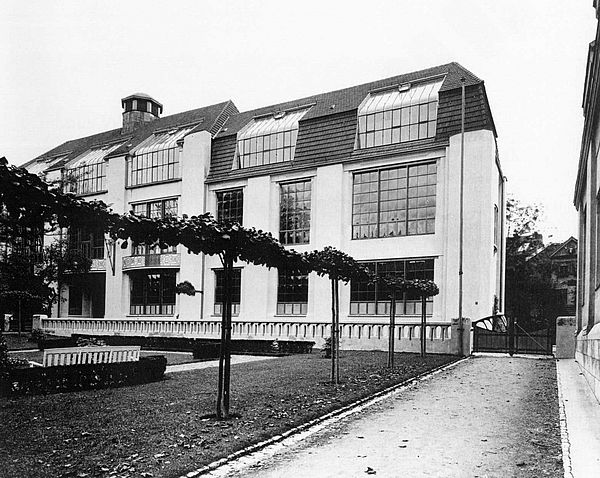
The Bauhaus in Weimar was a state school and depended on the government of Thuringia 🏛️🗳️
The period spanning 1913 to 1933 constitutes the foundational and operative chronology of the Bauhaus, a pivotal institution that redefined modern design, art, and architecture. While formally established in Weimar in 1919 under Walter Gropius, the intellectual and artistic currents preceding this date were instrumental in shaping its revolutionary ethos. This era is characterized by the school's unwavering commitment to the synthesis of art and craft, advocating for functionalism, material honesty, and the integration of aesthetic principles with industrial production methods.
Throughout its evolution across Weimar, Dessau, and Berlin, the Bauhaus continually refined its pedagogical approach, challenging traditional academic structures. It fostered a collaborative environment where theoretical exploration met practical application, guided by masters such as László Moholy-Nagy, Paul Klee, Wassily Kandinsky, and later directors Hannes Meyer and Ludwig Mies van der Rohe. The school’s relentless pursuit of rational and universal design solutions laid the groundwork for modernism. Its forced closure in 1933, under mounting political pressures, did not signify an end but rather a dissemination of its principles, cementing its global influence and ensuring its status as a benchmark for contemporary design thinking.
Base Material
- 'Bauhaus 1913-1933' pt.1