
Marianne Brandt: Metal Workshop Triumph
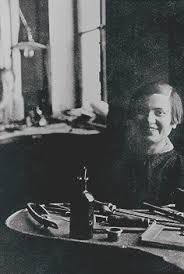
Marianne Brandt’s admission to the metal workshop came through her persistence, talent, and support from László Moholy-Nagy 💡
Established by Walter Gropius in 1919, the Bauhaus transcended the conventional school model, emerging as a foundational manifesto for the radical integration of art and craft within modern life's design. Its core vision sought to dissolve disciplinary boundaries, fostering an aesthetic rooted in functionality, efficiency, and unadorned simplicity. The institution championed the mass production of meticulously designed objects, devoid of superfluous ornamentation, thereby instituting a definitive shift towards a pure, utilitarian formal language.
The global resonance of the Bauhaus redefined architecture, industrial design, and art education alike. Influential figures such as Ludwig Mies van der Rohe, Marcel Breuer, and Hannes Meyer actualised its tenets, emphasising structural clarity, the honest application of materials, and spatial optimisation. This profound legacy endures within contemporary architecture and product design, where the principle of form intrinsically linked to function remains a fundamental pillar for crafting environments and objects that fulfil human needs with an inherent, purpose-driven beauty.
Base Material
- Bauhaus-Archiv / Museum für Gestaltung. "Bauhaus 1919–1933".
- MoMA | The Museum of Modern Art. "The Bauhaus".
- Encyclopædia Britannica. "Bauhaus".