
Lotte Beese: Bauhaus Pioneer
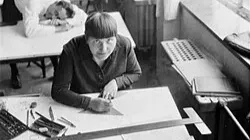
Lotte Beese was one of the few female architects associated with the Bauhaus 🏗️
Lotte Beese (1903–1988) represents a pivotal force in 20th-century architectural modernism. Her trajectory, rooted in the Dessau Bauhaus, illustrates a steadfast commitment to functionalism and systematic design, establishing her as a significant, yet often underrecognized, figure. As one of the few women admitted to the Bauhaus architecture department under Hannes Meyer, Beese challenged prevailing educational biases. Her curriculum emphasized rational planning, social housing, and mass production principles, diverging from the gendered craft disciplines often prescribed to female students. This foundational period instilled a rigorous analytical approach, shaping her early conceptual framework for urban and building design. Post-Bauhaus, Beese's career spanned influential European offices before her significant contributions to Rotterdam's post-war reconstruction. As a leading urban planner, her master plans for districts like Pendrecht and Alexanderpolder demonstrate a direct application of Bauhausian principles: systematic layout, standardized components, and a focus on community welfare. Her work in Rotterdam, a testament to clarity and efficiency, cemented her legacy as a practitioner who translated abstract Modernist theory into tangible, habitable environments.
Base Material
- Architectural Association School of Architecture. "AA XX 100: AA Women in Architecture 1917-2017."
- Bauhaus-Archiv Berlin. "Lotte Beese (1903–1988)."
- Doornbos, W. A. M. "Lotte Beese: architect en stedenbouwkundige." nai010 publishers, 2013.
- Weimar, K. "The Bauhaus and Weaving: Gender and Modernity in the Textile Workshop." Journal of Design History, 2000.