Danish Festivals Advance Bauhaus Principles
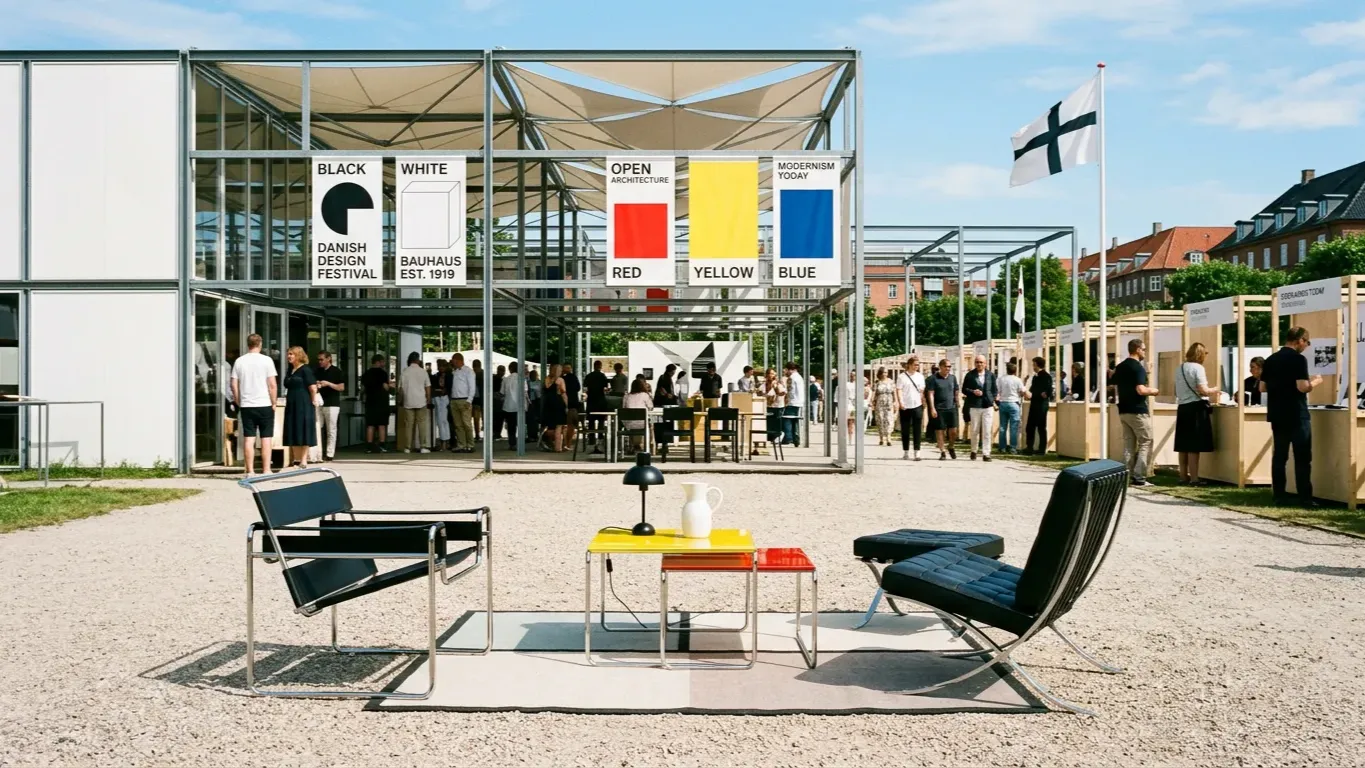
Danish design festivals demonstrably perpetuate the Bauhaus ethos, integrating its foundational principles of functionalism, technological integration, and minimalist aesthetics into immersive, publicly accessible experiences that redefine contemporary urban engagement.
Danish design festivals aren't just about looking at pretty objects; they’re keeping the Bauhaus fire burning by bringing its best ideas out of the textbooks and onto the streets. These events take "heavy" concepts like functionalism and minimalist aesthetics and turn them into spaces you can actually walk through, touch, and enjoy.
It’s a refreshing shift in how we experience our cities. By turning public squares into living laboratories, these festivals bridge the gap between high-brow theory and our daily commute. It’s essentially a conversation between 1920s ideals and what we actually need in 2026.
Ultimately, it proves that "good design" isn’t an elitist hobby—it’s the secret sauce that makes our surroundings work better and encourages us to look at the world with a slightly more critical, appreciative eye.
Base Material
- Gropius, Walter. *The New Architecture and the Bauhaus*. The MIT Press, 1965. (Primary source on Bauhaus philosophy)
- Møller, Svend Erik. *Danish Design: An Introduction*. Danish Design Centre, 2004. (For context on Danish design's historical alignment with functionalism)
- Press, Marion. *The Routledge Companion to Design History*. Routledge, 2017. (For general context on design festivals and their role in cultural dissemination)