
Chinese Craft: Bauhaus Reimagined
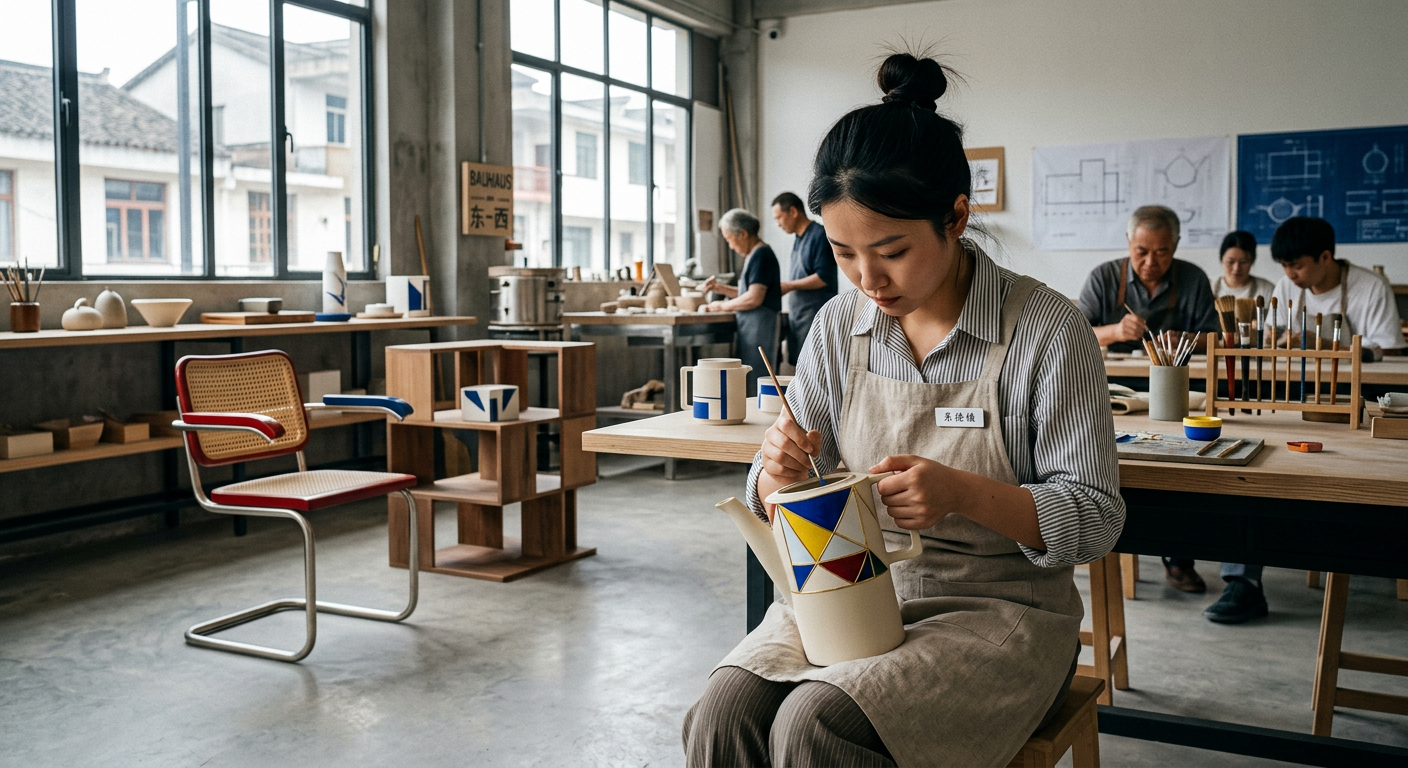
Chinese craft traditions are reinvented with a Bauhaus twist—local artisans blend centuries-old techniques with modern, functional design ✂️
The Bauhaus ethos endures as a foundational pillar in modern architectural discourse. It articulated a radical departure from ornamental excess, advocating instead for a design paradigm rooted in clarity, utility, and material honesty. This was more than an aesthetic shift; it was a philosophical assertion: architecture's primary purpose is to serve human need with efficiency and integrity.
Central to this vision is the axiom "form follows function," demanding design decisions be dictated by practical requirements rather than superficial embellishment. This manifests in structures defined by unadorned geometries, expansive glazing, and the truthful expression of industrial materials—steel, concrete, and glass. The resulting architecture offers spatial efficiency, luminous interiors, and a profound sense of order, qualities that continue to inform contemporary practice seeking sustainable and purposeful solutions.
Base Material
- Gropius, Walter. The New Architecture and the Bauhaus. The MIT Press, 1965.
- Mies van der Rohe, Ludwig. "Less is More." (Attributed principle).
- Frampton, Kenneth. Modern Architecture: A Critical History. Thames & Hudson, 2007.