
Archive
A structured collection of entries exploring design, education, collectivity and responsibility. Each entry has a defined type and visible base material.

Bauhaus and Mass Production: The Objects That Were Actually Made
The Bauhaus is remembered as a laboratory for mass production, but its record was uneven. Some textiles, lamps and furniture reached manufacturers; other celebrated objects remained prototypes or small-series products. The gap between ‘designed for industry’ and ‘widely produced’ is central to understanding the school.
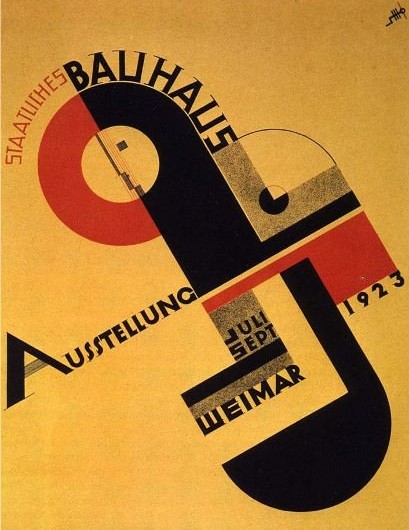
The 1923 Exhibition: ‘Art and Technology — a New Unity’
The Bauhaus exhibition of 1923 was both public defence and institutional pivot. Under political pressure to prove its value, the school staged its work for a wide audience while Gropius announced a decisive shift from expressionist craft ideals toward industry and machine production.

‘Point and Line to Plane’ in the Age of Grids and Component Libraries
Kandinsky’s visual grammar and today’s design systems share a method: decompose complex form into elements and relationships. The resemblance is useful—but it is an analogy, not a direct historical lineage.

The Dual-Master System: How the Bauhaus Replicated the Hierarchies It Claimed to Abolish
The Bauhaus tried to unite art and craft by pairing an artist ‘form master’ with a trained craftsman ‘workshop master’. The structure acknowledged that neither knowledge was sufficient alone, yet titles, authority and later institutional changes reproduced the very status differences the school claimed to overcome.

Design Bootcamps and the Vorkurs: What Was Lost in Translation
Bootcamps and the Bauhaus Vorkurs both promise concentrated learning through practice, but they optimise for different outcomes. The Vorkurs deliberately delayed professional specialisation; most bootcamps accelerate it. The question is not which model is better, but what disappears when foundations become job preparation.

Johannes Itten’s Vorkurs: The First Year That Changed Everything
Itten’s preliminary course did more than teach visual fundamentals. It tried to dismantle prior habits through material experiments, colour, composition and bodily awareness before students entered a specialised workshop. Its enduring influence lies in making foundations an active process of unlearning and discovery.

From Bauhaus to Ulm to Braun: How a School Became a Corporate System
The line from Bauhaus to Braun is not a simple inheritance of minimal form. Ulm first claimed Bauhaus continuity, then deliberately moved toward science, methodology and industry. Braun shows what happened when those methods entered a company: design became an organisational system, not just an object style.

Wellness Design in 2026: Mindfulness, Therapeutic Spaces and a Bauhaus Ghost
Contemporary wellness design often promises that light, nature, calm surfaces and spatial control can improve well-being. Bauhaus pedagogy also treated body, perception and environment as connected—but similarity is not inheritance, and design cannot substitute for care, rights or public health.

Physical Culture, Gymnastics and Fascism: An Uncomfortable Proximity at the Bauhaus
The Bauhaus participated in a wider Weimar-era fascination with breathing, exercise, dance, nudity and bodily reform. Fascism later mobilised parts of German body culture for radically different political ends. The proximity matters, but it is not an equivalence.